
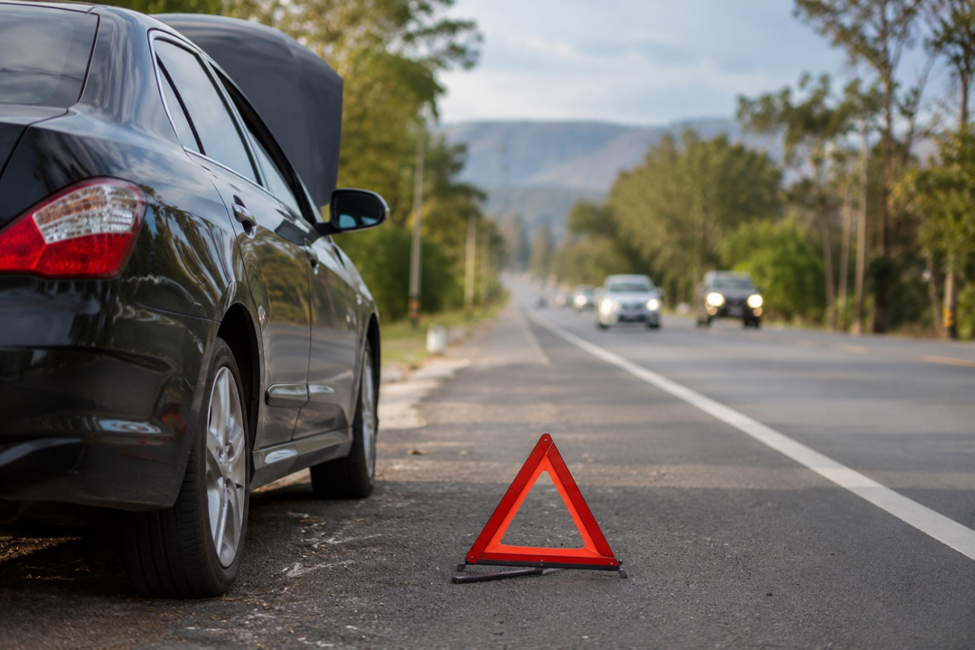
A car breakdown is inconvenient anywhere, but it becomes much more serious when it happens on a busy Canberra road. Traffic may be moving quickly, there may be little room to pull over, and other drivers may not immediately realise your vehicle has stopped.
Knowing what to do in those first few minutes can help protect you, your passengers and other road users. The priority is not diagnosing the problem straight away. It is getting yourself and the vehicle into the safest possible position before deciding what assistance you need.
Get Your Vehicle Out of Moving Traffic If You Can
If you notice warning lights, overheating, unusual noises, loss of power or another sign that something is wrong, avoid stopping suddenly unless you have no alternative.
Indicate as early as possible and look for somewhere safer to stop. Depending on where you are, this could be a road shoulder, breakdown lane, nearby side street or parking area. Once you are slowing significantly or have stopped, switch on your hazard lights to alert approaching traffic.
If the vehicle has already lost power, use whatever momentum remains to move away from the main flow of traffic if this can be done safely.
However, do not make a dangerous manoeuvre simply to get completely off the road. If the car cannot be moved, leave it where it is and concentrate on keeping yourself and others safe.
Make Yourself and the Vehicle Visible
Once stopped, make it as easy as possible for approaching motorists to recognise that your vehicle is stationary.
Keep your hazard lights operating. At night or in poor weather, your vehicle’s lights can provide additional visibility where appropriate.
Be particularly cautious about getting out of the car. Standing between your vehicle and passing traffic, walking around the roadside or attempting to inspect the vehicle on the traffic-facing side can expose you to unnecessary danger.
The safest place to wait will depend on where the vehicle has stopped. A car parked completely away from moving traffic presents a very different situation from one stranded partially within a live lane.
Decide Whether It Is Safe to Stay in the Vehicle
There is no single rule that applies to every roadside breakdown. Before deciding where to wait, assess your surroundings.
Consider:
- How close is the vehicle to moving traffic?
- Is it completely off the carriageway?
- Is there a safe area away from the road?
- Is there a roadside barrier?
- Are children, passengers or pets travelling with you?
- Is there smoke, leaking fluid, a burning smell or another immediate hazard?
Avoid putting yourself in greater danger simply to move away from the vehicle. If there has been a serious collision, someone is injured, the vehicle is creating an immediate traffic hazard or there is another emergency, contact emergency services.
Arrange Breakdown Assistance or Towing
Once everyone is safe, determine what type of assistance the vehicle requires.
A flat battery or some minor tyre problems may sometimes be resolved without transporting the vehicle. More significant mechanical failures, severe overheating, transmission problems, damaged wheels, electrical faults or accident damage may make it unsafe or impossible to continue driving.
When looking for professional towing Canberra assistance, be prepared to explain exactly where you are and what has happened. The more information the operator has, the easier it is to understand the situation and determine what equipment may be required.
Do not continue driving simply because the vehicle can still move. Warning lights, unusual noises, overheating or significant handling problems can indicate an issue that could worsen if you keep driving.
Give the Towing Operator Clear Information
Simply saying that your car has broken down may not provide enough information for the operator to plan the recovery properly.
Try to provide:
- your road, suburb or nearest intersection;
- the direction you were travelling;
- your vehicle’s make and model;
- what happened immediately before the breakdown;
- whether the vehicle starts;
- whether it can roll, steer and brake;
- whether it is obstructing traffic; and
- where you would like the vehicle taken, if you already know.
Location details are particularly important on long roads or major arterials. A nearby intersection, landmark or recognisable business can help clarify where you are.
You do not need to diagnose the mechanical problem yourself. Describing what you experienced — such as a loss of power, smoke, a warning light or a loud noise — can be more useful than guessing what has failed.
Avoid Trying to Fix the Car in an Unsafe Location
A common instinct after a breakdown is to open the bonnet and start looking for the problem. That may be reasonable if the vehicle is safely parked away from traffic, but it can be dangerous beside a busy road.
Even a straightforward task can become risky when you are concentrating on the vehicle while cars are passing nearby.
Your first question should therefore be: Is this a safe place to work on the vehicle?
If the answer is no, leave the diagnosis until the car is somewhere safer.
According to Joshua Harrison, Founder of Underground Towing & Salvage, one of the most important decisions after a breakdown is recognising when the location itself makes roadside troubleshooting unsafe. Drivers can become focused on getting their vehicle moving again and underestimate the danger posed by passing traffic. If a car cannot be moved to a genuinely safe position, protecting the occupants and arranging appropriate assistance should come before attempting repairs beside a live road.
What Towing Operators Commonly See During Roadside Call-Outs
Not every breakdown starts with a dramatic mechanical failure. A vehicle may initially show relatively minor symptoms before becoming unsafe or unable to continue.
Through years of assisting motorists across Canberra and the ACT, Underground Towing & Salvage has encountered roadside situations ranging from battery and tyre problems to mechanical failures and damaged vehicles requiring recovery.
This is one reason motorists should pay attention to changes in how their vehicle behaves. Rising engine temperature, repeated stalling, unusual vibrations, steering problems, smoke or unfamiliar noises should not simply be ignored because the vehicle is still moving.
If you are unsure what has happened, describe the symptoms rather than trying to provide a definitive diagnosis. An experienced operator can use that information to better understand the recovery requirements.
Be Especially Careful on Canberra’s Busier Roads
A breakdown becomes more complicated when traffic is heavy or travelling at higher speeds.
During peak periods, other motorists may have less time and space to react to a stationary vehicle. Poor weather, darkness and restricted sight lines can further reduce visibility.
On a busy road, avoid unnecessary movement around the vehicle. Do not stand in a traffic lane to inspect damage, retrieve belongings or direct vehicles around your car.
For situations involving an immediate road-safety threat or an accident requiring police assistance, follow guidance from relevant ACT authorities and emergency services, including ACT Policing. The objective is always to minimise further risk rather than trying to resolve the mechanical problem as quickly as possible.
What to Do After Your Vehicle Has Been Recovered
Once the immediate roadside danger has passed, you can concentrate on what happens to the vehicle.
If you already have a trusted mechanic, dealership or repairer, you may want the car transported directly there. Otherwise, it may need to be taken home or to another secure location until you can arrange an inspection.
After a breakdown:
- Have the cause properly diagnosed. Do not assume the vehicle is safe to drive simply because it starts again later.
- Keep relevant documentation. Towing, inspection and repair records may be useful, particularly if an insurer becomes involved.
- Contact your insurer where appropriate. This may be necessary when the vehicle has been damaged in a collision or another insured event.
- Address warning signs before driving again. If the original problem has not been identified, further driving could result in another breakdown or additional damage.
A tow gets the vehicle away from the immediate roadside problem, but it does not resolve the underlying mechanical issue.
Safety Comes Before the Vehicle
When your car breaks down on a busy Canberra road, focus first on people rather than the vehicle.
Move out of traffic where it is safe to do so, use your hazard lights, assess your surroundings and avoid standing or attempting repairs close to moving vehicles. Once the immediate danger is under control, arrange the roadside assistance or towing required to get the vehicle somewhere it can be inspected safely.
Cars can be repaired or recovered. Taking unnecessary risks beside a busy road simply to diagnose the problem a few minutes earlier is rarely worthwhile.
