
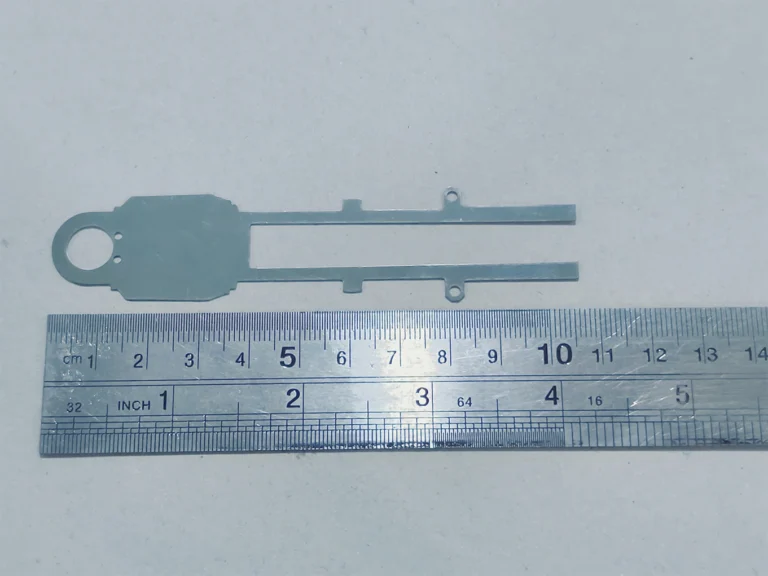
In the world of modern manufacturing, few processes demand the level of accuracy and consistency required for precision metal stamping parts. These components are the building blocks of countless products, from the connectors in your smartphone to the critical safety components in automobiles and aircraft. The ability to produce precision metal stamping parts with tight tolerances, complex geometries, and exceptional repeatability has made this manufacturing process indispensable across virtually every industry.
This comprehensive guide explores the fundamentals of precision metal stamping parts, including the various processes involved, material selection criteria, tolerances and surface finish requirements, and real-world applications across multiple sectors.
What Are Precision Metal Stamping Parts?
Precision metal stamping parts are components manufactured using stamping presses and precision dies that cut, shape, or form metal sheets into specific geometries with extremely tight tolerances. Unlike general stamping, which may allow for more variation, precision metal stamping parts are characterized by their dimensional accuracy, consistency, and high-quality surface finishes.
The fundamental concept is straightforward: a flat metal sheet or coil is fed into a stamping press, where a precision die applies force to cut or form the material. However, producing precision metal stamping parts requires a deep understanding of material behavior, tooling design, press capabilities, and quality control.
The Range of Stamping Processes for Precision Parts
Precision metal stamping parts are produced using several distinct processes, each suited to different geometries and requirements.
Blanking
Blanking is the process of cutting a flat shape from a metal sheet. The punched-out piece becomes the workpiece. In precision metal stamping parts, blanking is typically the first operation and requires extremely sharp tooling and precise clearances to achieve clean edges without burrs.
Piercing
Piercing involves cutting holes or openings in the metal sheet. This process creates features such as mounting holes, slots, and cutouts in precision metal stamping parts. Precision piercing requires exact alignment and clearance to maintain dimensional accuracy.
Bending
Bending creates angles and three-dimensional shapes from flat sheet metal. In precision metal stamping parts, bending requires careful control of springback—the tendency of metal to return to its original shape after bending. Precision bending often involves over-bending or coining to achieve the final geometry.
Drawing
Drawing forms a flat sheet into a three-dimensional shape, such as a cup, housing, or deep cavity. Deep drawing is one of the most challenging processes for precision metal stamping parts, requiring precise control of material flow, lubrication, and press parameters.
Coining
Coining creates features with sharp detail, such as embossed text, logos, or intricate patterns. The material is compressed between two dies under high pressure. Coining is used for precision metal stamping parts requiring fine detail or extreme accuracy.
Embossing
Embossing creates raised or recessed features on the surface of the sheet metal. This process is used for stiffening panels, creating grip patterns, or adding decorative elements to precision metal stamping parts.
Material Selection for Precision Metal Stamping Parts
Material selection is one of the most critical decisions in producing precision metal stamping parts. The chosen material must meet the performance requirements of the final part while being suitable for the stamping process.
Commonly Used Materials
Steel is the most widely used material for precision metal stamping parts due to its strength, formability, and cost-effectiveness. Low-carbon steels offer excellent formability. High-strength low-alloy (HSLA) steels and advanced high-strength steels (AHSS) provide improved strength-to-weight ratios for demanding applications.
Stainless Steel offers exceptional corrosion resistance and strength. It is used for precision metal stamping parts in medical devices, food processing equipment, and architectural applications. Stainless steel work-hardens during stamping, requiring careful process control.
Aluminum provides a high strength-to-weight ratio and excellent corrosion resistance. It is increasingly popular for precision metal stamping parts in automotive, aerospace, and consumer electronics applications. However, aluminum has lower formability than steel and is more prone to cracking and springback.
Copper and Brass offer excellent electrical and thermal conductivity. These materials are highly formable and widely used for precision metal stamping parts in electrical components and heat exchangers.
Exotic Alloys such as titanium, Inconel, and Hastelloy are used for precision metal stamping parts in demanding applications requiring high strength, heat resistance, or corrosion resistance.
Key Material Properties
Formability refers to the ability of a material to undergo plastic deformation without cracking. Materials with high formability can be drawn, bent, and stretched more readily for precision metal stamping parts.
Springback is the tendency of a material to return to its original shape after forming. This behavior must be accounted for in die design and process parameters for precision metal stamping parts.
Work Hardening occurs when a material becomes harder and stronger as it is deformed. Work-hardening materials require progressive forming in precision metal stamping parts to prevent cracking.
Surface Finish affects both the appearance and performance of precision metal stamping parts. Material with a consistent, defect-free surface is essential for high-quality results.
Tolerances and Surface Finish
Achieving precise tolerances is the defining characteristic of precision metal stamping parts.
Typical Tolerances
Standard Tolerances for precision metal stamping parts typically range from ±0.005 inches (±0.127 mm) for flat features to ±0.010 inches (±0.254 mm) for formed features.
Precision Tolerances of ±0.001 inches (±0.025 mm) or tighter are achievable for precision metal stamping parts but require high-quality tooling, strict process control, and premium materials.
Geometric Tolerances such as flatness, roundness, and parallelism ensure that precision metal stamping parts function correctly in assembly.
Surface Finish Considerations
As-Stamped Finish is the surface condition immediately after stamping. It typically shows tool marks, slight scratches, and a matte appearance. This finish is acceptable for most functional precision metal stamping parts.
Improved Finishes such as grinding, polishing, or abrasive blasting achieve smoother surfaces for aesthetic or high-performance precision metal stamping parts.
Coated and Plated Finishes such as zinc plating, powder coating, and anodizing add functional or decorative properties to precision metal stamping parts.
Design Considerations for Precision Metal Stamping Parts
Effective design is essential for successful precision metal stamping parts.
Tolerances
Specify tolerances only where necessary. In precision metal stamping parts, every increment of precision increases cost and lead time. Allow generous tolerances wherever possible.
Radii
Add radii to internal corners to reduce stress concentrations and improve formability. A radius of at least 0.5 times material thickness is recommended for precision metal stamping parts.
Hole Placement
Holes should be placed at least twice the material thickness from the edge to prevent distortion during stamping. In precision metal stamping parts, proper hole placement ensures structural integrity.
Grain Direction
Consider the rolling direction of the material. The grain direction affects formability, and precision metal stamping parts should be oriented to take advantage of the material’s best properties.
Bend Relief
Bend relief cuts prevent tearing at the corners of bends. In precision metal stamping parts, bend relief is essential for maintaining structural integrity.
Applications of Precision Metal Stamping Parts
Precision metal stamping parts are used across virtually every industry.
Automotive components such as connectors, terminals, brackets, sensors, and structural parts rely on precision metal stamping parts for their accuracy and reliability.
Aerospace parts including structural brackets, housings, and fasteners require the lightweight, high-strength characteristics of precision metal stamping parts.
Medical Devices such as surgical instruments, implant components, and diagnostic equipment housings depend on the precision and cleanliness of precision metal stamping parts.
Electronics components including connectors, shielding, lead frames, and heat sinks are produced as precision metal stamping parts for their accuracy and conductivity.
Consumer Goods like appliance parts, hardware, and decorative components are manufactured as precision metal stamping parts for cost-effectiveness and consistency.
Industrial Equipment components including gears, washers, and custom parts are produced through precision metal stamping parts for durability and precision.
Quality Control for Precision Metal Stamping Parts
Quality control is essential for precision metal stamping parts.
First Article Inspection (FAI) verifies that the first precision metal stamping parts meet all specifications.
In-Process Inspection catches deviations early in precision metal stamping parts production.
Statistical Process Control (SPC) monitors key process parameters in precision metal stamping parts production.
CMM and Optical Inspection provide accurate dimensional data for precision metal stamping parts.
Conclusion
Precision metal stamping parts are the foundation of countless products across modern industry. By understanding the processes, materials, design considerations, and quality control requirements, manufacturers can produce precision metal stamping parts that meet the most demanding specifications.
The key to successful precision metal stamping parts lies in careful planning, collaboration with suppliers, and a commitment to quality. Investing time in understanding the intricacies of precision metal stamping parts will pay dividends in reduced development costs, faster time to market, and superior product quality.
