
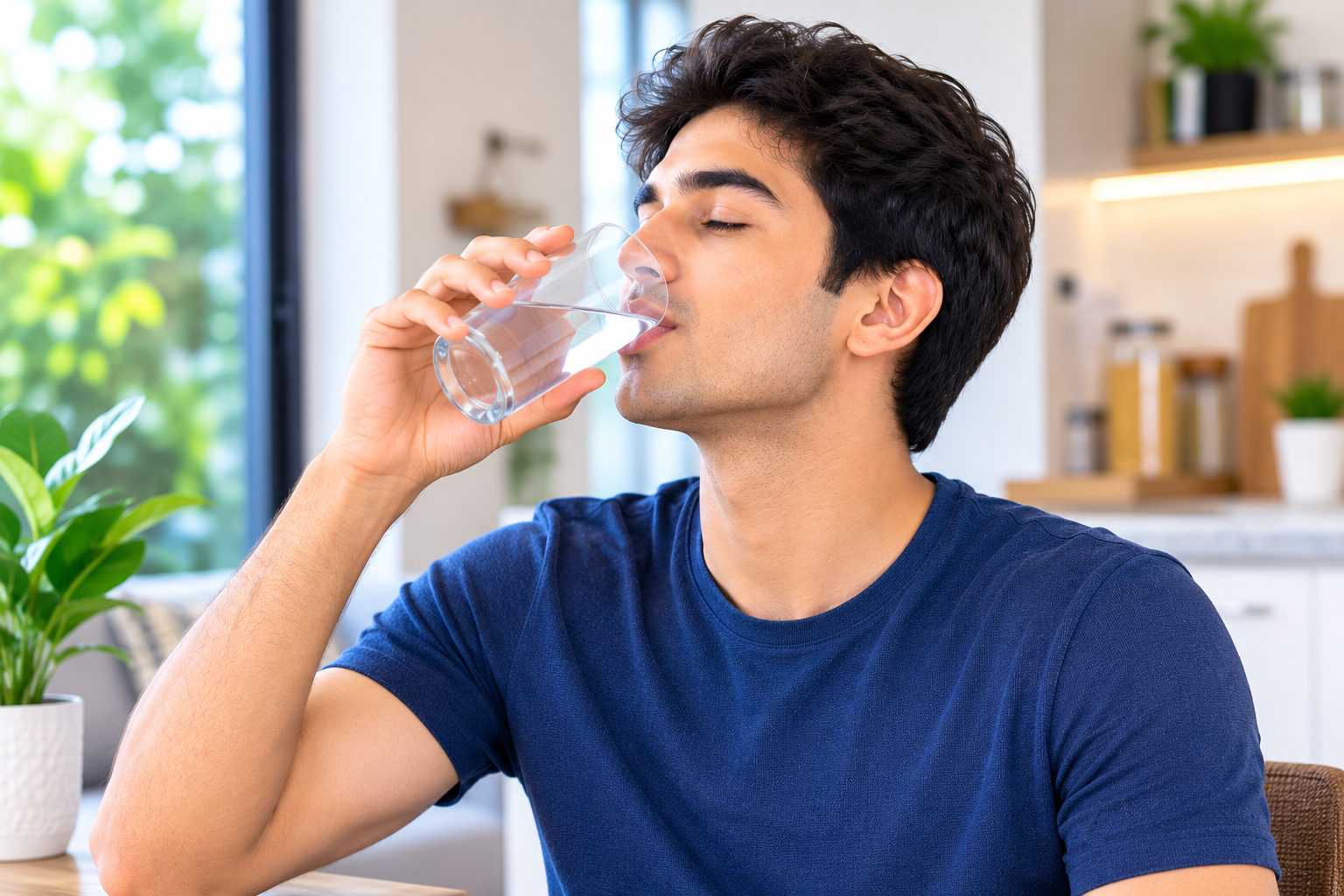
Drinking water must be built around one principle: that water safety should be managed systematically from the source to the tap, and that is what Japan’s approach to providing good hydrogen water quality. Japanese water management considers microbiological, chemical, physical, and aesthetic parameters rather than assessing water quality solely by taste or appearance. Japan’s drinking-water standards cover 51 items, including E. coli, lead, arsenic, mercury, nitrate and nitrite, organic compounds, pH, taste, odour, colour, and turbidity. As scientific knowledge develops, these standards are also reviewed.
Water Quality Starts Before the Water Reaches Your Home
Monitoring the water source is the first step in ensuring consumer safety, which continues through distribution and treatment. In order to identify anomalies early and take appropriate action when water quality issues emerge, Japanese guidelines place a strong emphasis on monitoring water sources. This method embodies a crucial idea: continuous quality control is necessary to produce safe drinking water.
Customers now consider water quality to be more than just whether the water tastes good or looks clear. Water quality is determined by several factors, including microbial contamination, metals, chemicals, organic matter, pH, colour, odour, and turbidity. As a result, Japan’s standards establish a systematic framework for tracking what is delivered to customers.
Why Water Filtration Still Matters at Home
The quality of water at the point of consumption can also be influenced by household plumbing, storage, and the condition of water-treatment equipment, even where municipal water is regulated. For this reason, filtration is now a crucial component of modern home water technology.
Depending on the quality of the incoming water and the substances the system is intended to reduce, a well-designed filtration system may be employed as an extra treatment step. Therefore, consumers should look beyond broad claims like purified water and find out what a specific filter is required to remove.
From Purification to Functional Water Technology
Additionally, modern water technology is advancing beyond simple purification. Water treatment and electrolysis are combined in technologies such as the hydrogen water machine to produce water with specific properties.
Certain systems can produce both alkaline and acidic water streams through electrolysis, including electrolytic hydrogen water with dissolved molecular hydrogen. As a result, interest in hydrogen alkaline water and the idea of functional hydration has grown.
Crucially, the functions of water ionisation and purification are distinct. While electrolysis modifies the properties of suitably treated water, filtration concentrates on water quality and impurity reduction. Instead of treating all water technologies equally, consumers can make better decisions by being aware of this distinction.
Get Modern Wellness With Japanese Technology
Japan is known for its modern technology and development. This approach is also implemented in water quality. Their water approach is an example of how engineering, safety, and ongoing development can be managed together. The focus is on developing technology that accounts for water quality, filtration, electrolysis, efficiency, and daily usability, rather than just building a machine.
The philosophy of these modern water systems is to integrate filtration, electrolysis, and monitoring technologies. The objective is to make advanced water technology accessible for homes while maintaining water quality and responsible use.
Indians Are Adapting Japanese Water Technology
India has the scope to improve water quality. It can be done by adapting Japanese water innovation. People who really want to take care of their and their family’s health can now access this water technology approach. One such Hydrogen water generator is Fujiiryoki. The hydrogen alkaline water systems produce hydrogen-rich alkaline water for drinking and other water for household uses, combining advanced filtration and electrolysis.
This Japanese water technology provides a different perspective for consumers interested in the relationship between water quality, technology, and daily wellness. It provides safe water, manages its quality, and creates water suitable for various uses.
