
What Is RFID Inlay and How Does It Work in Casino Chips?
RFID inlay is the core component that turns an ordinary casino chip into a trackable smart device. It is a thin, flexible assembly consisting of a microchip (integrated circuit) bonded to a printed antenna on a substrate, typically made of PET or paper. This assembly is then embedded inside a poker chip during the manufacturing process, creating a chip that can be detected and identified by an RFID reader without requiring direct line of sight.
There are two primary forms of RFID inlay used in casino applications. Wet inlays come with adhesive backing, allowing manufacturers to embed them directly into chip molds as part of the production flow. Dry inlays lack adhesive and serve as a semi-finished component that undergoes additional lamination before being sealed inside the chip. The choice between them depends on the chip manufacturer’s molding process, but both types meet the same functional standard once embedded.
The RFID inlays used in casino chips typically operate at the 13.56 MHz high-frequency (HF) band, following the ISO 15693 or ISO 14443 standard. This frequency provides a reliable read range of a few centimeters to approximately 30 centimeters — ideal for table-level chip detection where the reader is embedded in the table surface directly beneath the betting area. Each inlay is programmed with a unique identifier (UID) during production that cannot be duplicated, making counterfeiting virtually impossible.
How many chips can an RFID table read? A single HF table reader can interrogate up to 500 chips per second, reading chips stacked up to 40 high. This means a full baccarat or blackjack hand with multiple players and side bets can be scanned in a fraction of a second, with no perceptible delay to the game.
The Macau Mandate: Why All Six Operators Are Installing RFID Tables
In April 2024, Macau’s Gaming Inspection and Coordination Bureau (DICJ) formally urged all six gaming concessionaires to install RFID-enabled tables across their properties. The regulatory push was driven by a clear objective: replace manual chip tracking with real-time, auditable electronic records on every chip in play across Macau’s casino floors.
According to Morgan Stanley research notes from late 2024, the initiative represents one of the largest coordinated RFID deployments in the global gaming industry. The investment required is substantial — outfitting a single casino with RFID readers across its table games floor can cost several million dollars — but the payback period, analysts estimate, can be as short as 18 months when factoring in reduced fraud, optimized labor allocation, and the ability to identify foreign players eligible for the 5% tax rebate.
All six concessionaires — MGM China (deploying since 2014, now expanding), Melco Resorts (first tables Q1 2024), Galaxy Entertainment (Q2 2024), Sands China (Q4 2024), SJM Holdings, and Wynn Macau (already operating RFID tables at Wynn and StarWorld) — are at various stages of implementation. The Nevada Gaming Control Board’s 2024 annual report noted that similar RFID adoption in Las Vegas has reduced chip theft losses by an estimated 35%, a benchmark that Macau operators are closely tracking as a proxy for their own expected returns.
How RFID Technology Is Implemented in Casino Tables
RFID chip tracking in a casino environment involves three integrated layers that work together to provide complete visibility over every chip on the floor.
Layer 1: Table-Level RFID Readers
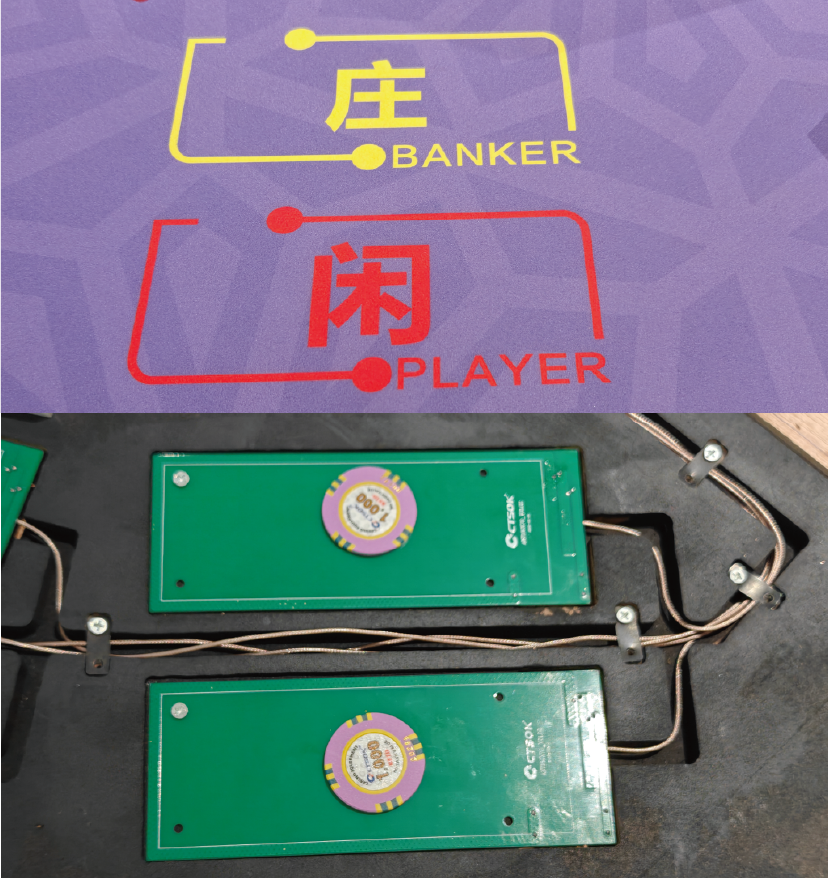
Each gaming table is fitted with an antenna array embedded beneath the playing surface. These antennas detect RFID chips placed within the betting areas, drop boxes, and chip tray sections. When chips are placed on the table, the reader captures the unique ID of each chip within milliseconds and records the transaction — including which chip, when, and in which betting position — with no action required from the dealer. Casino RFID poker gaming tables designed for both VIP and mass-market operations integrate this antenna architecture as a standard feature, enabling operators to deploy chip tracking without custom engineering.
The technical challenge at this layer is interference management. With dozens of RFID tables operating in close proximity on a casino floor, signals from adjacent tables can overlap. One of the proven solutions is multi-channel frequency management. In GPI’s implementation, each tag randomly selects one of eight channels to transmit on, and the reader is configured to receive all eight channels simultaneously, ensuring that chips on adjacent tables do not interfere with one another.
Layer 2: Table Management System Integration
The data captured by table-level readers is transmitted to the casino’s Table Management System (TMS) via Ethernet or USB. The TMS processes raw RFID reads into structured game records — which chips are in play, which have been won, which remain in the dealer’s tray. This layer also handles the critical function of associating chips with individual players, linking the unique chip ID to a player account at the time of purchase.
Layer 3: Backend Analytics and Reporting
The casino management system aggregates data from all tables across the property. Managers can view real-time dashboards showing chip inventory by denomination and table, player ratings with exact betting data rather than visual estimates, and anomaly detection alerts when unusual chip movement patterns suggest attempted fraud.
A modern RFID smart casino table with integrated hardware and touchscreen monitor, showing the type of equipment used in Macau installations for real-time chip tracking and data display.
Four Concrete Benefits Operators Are Reporting
The RFID deployments in Macau have yielded measurable operational improvements. Operators across the six concessionaires have reported the following benefits based on their implementation data.
1. Elimination of Dealer Errors in Payouts
Mistakes in chip payout calculations are a persistent source of loss for casinos. The Nevada Gaming Control Board’s 2024 report estimates that dealer errors account for approximately 0.5-1.5% of table game revenue variance. RFID systems eliminate this by automatically reconciling chip movements against game outcomes, flagging any transaction where the chip count exiting the tray does not match the expected payout.
2. Real-Time Counterfeit Detection
Embedded RFID inlays carry unique encrypted IDs that are verified against the casino’s chip database every time a chip changes hands. Any chip without a valid registered ID — or any chip whose ID has been flagged as lost or stolen — is detected instantly when placed on an RFID table, enabling security personnel to intercept it before it enters circulation.
3. Optimized Labor Allocation
With real-time data on chip flow and table utilization, casino management can shift staff and open or close tables based on actual demand rather than supervisor estimates. Macau operators using RFID have reported 10-15% reductions in pit management overhead by reallocating dealers and supervisors to areas with genuine need.
4. Accurate Player Rating for Marketing
Traditional player ratings rely on a floor supervisor’s visual estimate of average bet size and time at the table — an inherently imprecise method. RFID provides a complete electronic record of every chip a player buys, bets, and cashes out. The casino knows the exact handle, exact playing time, and exact net result for each rated player, enabling precise marketing ROI calculation and accurate comp allocation.
For operators evaluating this technology, the infrastructure is not tied to a single jurisdiction. The same 13.56 MHz HF RFID readers, multi-channel interference management protocols, and TMS integration interfaces deployed in Macau are available to any casino. Browse Macaumr casino supplier to explore table solutions designed for both VIP and mass-market operations.
Frequently Asked Questions
What is the difference between wet inlay and dry inlay in casino chips?
Wet inlay comes with adhesive backing and is ready for direct embedding into chip molds during production. Dry inlay lacks adhesive and requires additional lamination before being sealed inside the chip. Both types use the same RFID chip and antenna technology, with the choice determined by the chip manufacturer’s molding process.
How does an RFID table detect counterfeit chips?
Each chip contains an RFID inlay programmed with a unique encrypted ID. When placed on an RFID reader-equipped table, the system verifies the chip’s ID against the casino’s registered chip database. Any chip whose ID is not found in the database, or has been flagged as lost or stolen, triggers an alert to security personnel within milliseconds.
Which Macau casinos are using RFID technology?
All six Macau gaming concessionaires are at various stages of RFID deployment: MGM China (operational since 2014, expanding), Melco Resorts (Q1 2024), Galaxy Entertainment (Q2 2024), Sands China (Q4 2024 at Grand Lisboa), SJM Holdings, and Wynn Macau (already live at Wynn and StarWorld). The DICJ has urged all operators to adopt the technology as part of a coordinated industry-wide upgrade.
Can RFID chips be counterfeited or duplicated?
RFID inlays used in casino chips are factory-programmed with globally unique, non-rewritable identifiers. The integrated circuit is sealed inside the chip body with no external access, and the encrypted communication protocol prevents unauthorized reading. Current HF 13.56 MHz RFID technology has no known method for cloning a registered casino chip inlay without access to the manufacturer’s secure programming equipment.
How fast can an RFID table read chips at a busy baccarat table?
A standard casino RFID table reader can interrogate up to 500 chips per second, reading chips stacked up to 40 high. At a baccarat table with multiple players and side bets, the system captures all chip positions in a fraction of a second, with no delay to the game flow or the dealer’s operations.
