


King Nebuchadnezzar is one of the most powerful and unforgettable figures in the Bible, known for his vast empire, military strength, and unmatched authority. As the king of Babylon, he played a central role in biblical history, especially in the Book of Daniel, where his encounters with God reveal deep spiritual lessons. His story highlights how God can work through world leaders, using both success and hardship to fulfill divine purposes and reveal His sovereignty over all kingdoms.
The Bible presents Nebuchadnezzar’s life as a dramatic journey of rise, fall, and redemption. From ruling with pride and glory to being humbled by God and living like a beast, his transformation is both shocking and meaningful. Through this powerful account, readers learn about the dangers of pride, the certainty of God’s judgment, and the hope of restoration for those who acknowledge God’s authority and turn back to Him.
Who Was King Nebuchadnezzar?
King Nebuchadnezzar was one of the most powerful rulers of the ancient world and the greatest king of the Babylonian Empire. He ruled from around 605 to 562 BC and is best known in the Bible for his role in the destruction of Jerusalem and the exile of the Jewish people to Babylon. Nebuchadnezzar appears prominently in the Book of Daniel, where his reign is used to show God’s authority over earthly kings and kingdoms.
Historically, Nebuchadnezzar was a skilled military leader and builder who expanded Babylon into a magnificent city, famous for its walls, temples, and the Hanging Gardens. Biblically, however, his story goes beyond political success. Through prophetic dreams, divine warnings, and personal humbling, Nebuchadnezzar’s life becomes a lesson about pride, power, and submission to God. His journey shows that no ruler is above God, and even the mightiest king can be transformed when he recognizes the Most High as the true ruler over all.
Nebuchadnezzar Conquers Jerusalem

Nebuchadnezzar conquered Jerusalem during his expansion of the Babylonian Empire in the early sixth century BC. After defeating Egypt and gaining control over the region, he turned his attention to Judah, which had rebelled against Babylonian rule. In 597 BC, Nebuchadnezzar besieged Jerusalem, captured the city, and took King Jehoiachin, along with many nobles, warriors, and skilled craftsmen, into exile in Babylon.
A second and more devastating conquest followed in 586 BC after continued rebellion by Judah’s leaders. This time, Nebuchadnezzar’s army completely destroyed Jerusalem, burned the Temple of Solomon, and broke down the city walls. The remaining people were either killed or carried into exile, marking a tragic turning point in Israel’s history. The Bible presents this event as both a historical judgment and a fulfillment of God’s warnings through the prophets, showing the serious consequences of disobedience and the sovereignty of God over nations.
Nebuchadnezzar’s First Dream – The Statue
Nebuchadnezzar’s first dream, recorded in Daniel chapter 2, came during the early years of his reign and left him deeply troubled. In the dream, he saw a massive and terrifying statue made of different materials: a head of gold, chest and arms of silver, belly and thighs of bronze, legs of iron, and feet mixed with iron and clay. A stone cut without human hands struck the statue’s feet, causing the entire statue to crumble, while the stone grew into a great mountain that filled the whole earth.
Through God’s revelation, the prophet Daniel explained that the statue represented a sequence of world empires. Nebuchadnezzar himself was the head of gold, symbolizing Babylon’s power and splendor. The other metals represented kingdoms that would rise after him, each less unified than the one before. The stone symbolized God’s eternal kingdom, which would destroy all human empires and stand forever. This dream showed Nebuchadnezzar that his authority came from God and that all earthly power is temporary compared to God’s everlasting rule.
You can also read; How Many Times Has the Bible Been Rewritten?
The Fiery Furnace – Testing of Faith
The story of the fiery furnace, found in Daniel chapter 3, reveals a powerful test of faith during King Nebuchadnezzar’s reign. After interpreting his earlier dream, Nebuchadnezzar built a massive golden image and commanded everyone to bow down and worship it. Anyone who refused would be thrown into a blazing furnace. Shadrach, Meshach, and Abednego—three faithful servants of God—chose obedience to God over obedience to the king, even when faced with death.
When they were thrown into the fire, something miraculous happened. The flames did not harm them, and a fourth figure appeared in the furnace, described as being like “a son of the gods.” Nebuchadnezzar was astonished and ordered them to be brought out, unharmed and untouched by smoke. This event showed that God is able to protect those who remain faithful under pressure. It also led Nebuchadnezzar to publicly acknowledge God’s power, demonstrating that true faith can influence even the most powerful rulers.
Nebuchadnezzar’s Second Dream – The Great Tree
Nebuchadnezzar’s second dream, recorded in Daniel chapter 4, revealed a personal warning from God about pride and humility. In the dream, the king saw a great tree in the middle of the earth that grew tall and strong, providing shelter, food, and protection for people and animals everywhere. Suddenly, a heavenly messenger commanded that the tree be cut down, leaving only the stump bound with iron and bronze, while the tree’s mind would be changed to that of a beast for a period of time.
The prophet Daniel explained that the great tree represented Nebuchadnezzar himself, whose power and influence had spread across the world. Because of his pride, God would humble him by removing his kingdom and sanity until he acknowledged that the Most High rules over all human kingdoms. The dream was fulfilled when Nebuchadnezzar was driven from society and lived like an animal for seven years. This vision emphasized a clear message: God opposes pride but shows mercy and restoration to those who repent and recognize His supreme authority.
The Humbling and Restoration of the King
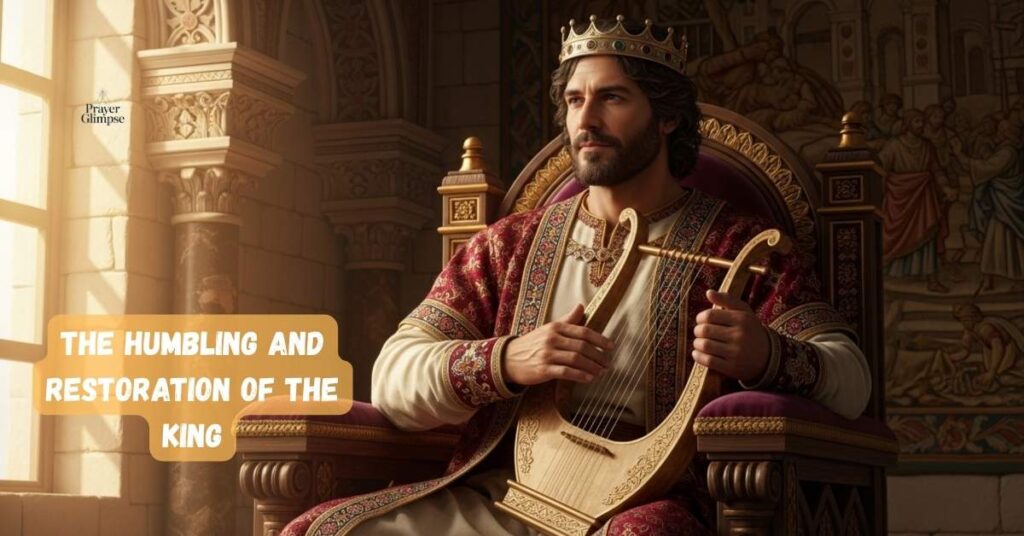
Nebuchadnezzar’s humbling came exactly as God had warned through the prophet Daniel. At the height of his pride, as he boasted about the greatness of Babylon and his own achievements, God removed his sanity and royal authority. He was driven away from people and lived like an animal, eating grass and exposed to the elements, until he learned that human power is nothing apart from God’s will.
After the appointed time passed, Nebuchadnezzar lifted his eyes toward heaven and acknowledged the sovereignty of the Most High God. In that moment, his sanity was restored, and his kingdom and honor were given back to him. He praised and glorified God, recognizing that all His works are just and His ways are right. This powerful transformation shows that God’s discipline is meant to lead to repentance and restoration, offering hope that even the proudest hearts can be redeemed when they submit to Him.
Key Lessons from King Nebuchadnezzar’s Story
King Nebuchadnezzar’s story offers powerful spiritual lessons that remain relevant for believers today. His rise to unmatched power shows that success and authority ultimately come from God, not human strength or intelligence. When Nebuchadnezzar allowed pride to fill his heart, he learned through painful experience that no position, wealth, or achievement places a person above God. His life reminds us that pride leads to downfall, but humility invites God’s grace.
Another key lesson is the importance of faithfulness and obedience to God, even under pressure. Through events like the fiery furnace and the interpretation of dreams, God demonstrated His power to protect the faithful and guide those who seek Him. Nebuchadnezzar’s eventual repentance and restoration reveal God’s mercy and willingness to forgive. His journey teaches that acknowledging God’s authority brings true wisdom, and surrendering to Him leads to lasting transformation.
Bible Verses to Remember
- Daniel 2:21 – “He changes times and seasons; He deposes kings and raises up others.”
This verse reminds us that all authority ultimately belongs to God. - Daniel 3:17–18 – “Our God whom we serve is able to deliver us… but even if He does not, we will not serve your gods.”
A powerful declaration of faith from Shadrach, Meshach, and Abednego. - Daniel 4:17 – “The Most High rules the kingdom of men and gives it to whom He will.”
God’s clear message to Nebuchadnezzar about divine control over human power. - Daniel 4:30 – “Is not this the great Babylon I have built… by my mighty power?”
A warning example of pride that led to the king’s humbling. - Daniel 4:34 – “His dominion is an everlasting dominion, and His kingdom endures from generation to generation.”
Nebuchadnezzar’s confession after recognizing God’s supreme authority. - Daniel 4:37 – “Those who walk in pride He is able to humble.”
A final lesson from the king’s own testimony.
These verses help reinforce the timeless truth that God alone is sovereign, and humility before Him leads to restoration and praise.
FAQs
Who was King Nebuchadnezzar in the Bible?
He was the powerful king of Babylon known for conquering Jerusalem and learning humility through God’s discipline.
Why did God humble Nebuchadnezzar?
God humbled him because of his pride and failure to acknowledge God as the true source of his power.
What was Nebuchadnezzar’s dream about the statue?
The statue represented future world kingdoms and showed that God’s eternal kingdom would outlast all human empires.
Who were the men thrown into the fiery furnace?
Shadrach, Meshach, and Abednego faithful servants who trusted God and were miraculously protected.
Did Nebuchadnezzar truly turn to God?
Yes, after his restoration, he openly praised and honored the Most High God.
Conclusion
King Nebuchadnezzar story in the Bible is a powerful reminder of God’s sovereignty over human kingdoms and the dangers of pride. From his rise as a mighty and influential ruler to his humbling through divine discipline, the narrative shows that no matter how powerful a person becomes, they remain under God’s authority. Events like the fiery furnace and his prophetic dreams highlight God’s ability to guide, protect, and teach lessons through both warning and mercy. The king’s experiences encourage readers to trust God, remain humble, and rely on His wisdom rather than their own strength.
Ultimately, Nebuchadnezzar’s journey ends with restoration and redemption, illustrating that God’s discipline is purposeful and transformative. His acknowledgment of the Most High serves as a timeless lesson that repentance and humility can lead to renewed favor and understanding. The story challenges believers to recognize God’s supremacy, embrace faithfulness in all circumstances, and remember that true power and honor come from submitting to Him.
