

The Book of Revelation, also called the Apocalypse, is the final book of the Bible. Its dramatic visions, symbolic imagery, and prophetic messages have fascinated readers for centuries. Among these visions, the Seven Seals stand out as a central theme in understanding God’s plan for the world and humanity. These seals, described in Revelation 5–8, outline events that reveal God’s judgment, the trials of humanity, and the ultimate triumph of Christ.
Understanding 7 Seals in the Bible not only sheds light on prophetic events but also provides practical spiritual lessons for believers today. From war and famine to the cries of the martyrs and cosmic upheavals, each seal carries a message about God’s sovereignty, justice, and ultimate plan of redemption.
What Are the Seven Seals in the Bible?
7 Seals in the Bible are described as a scroll held in the right hand of God, sealed with seven seals (Revelation 5:1). No one in heaven or on earth was found worthy to open the scroll except Jesus Christ, the Lamb of God (Revelation 5:5).
When Christ opens each seal, it triggers a series of symbolic events. These events are often interpreted as representing both spiritual and physical realities. The first four seals introduce the Four Horsemen of the Apocalypse, representing conquest, war, famine, and death. The fifth seal depicts the cries of the martyrs, the sixth seal shows cosmic disturbances, and the seventh seal reveals a profound silence in heaven, marking the anticipation of God’s final judgment.
The imagery is rich with symbolism, yet the underlying message is clear: God is sovereign, history is under His control, and His justice and mercy will ultimately prevail.
Historical and Theological Context
The Book of Revelation was written by John the Apostle while he was in exile on the island of Patmos (Revelation 1:9). Written during a time of persecution, the text addresses the struggles of early Christians living under the Roman Empire.
Understanding the historical context helps us interpret the symbolism of the seals:
- Political Oppression: The Roman Empire’s domination mirrors the first two horsemen’s conquest and war.
- Economic Hardship: The third horseman’s famine reflects the social and economic struggles of the time.
- Persecution: The fifth seal’s martyrs echo the suffering of early Christians.
- Apocalyptic Expectation: The cosmic signs of the sixth seal illustrate a hope for divine intervention and justice.
Theologically, the Seven Seals reveal that God is not passive in the face of evil. Even when humanity seems to be in chaos, His plan is unfolding perfectly. Each seal serves as a divine revelation, encouraging believers to remain faithful and vigilant.
The First Four Seals – The Four Horsemen of the Apocalypse
The first four seals are among the most famous and dramatic in the Bible. They introduce the Four Horsemen, each representing different aspects of human experience and divine judgment.
You can also read; FRIENDSHIP BIBLE VERSE
1. The First Seal – The White Horse (Revelation 6:1–2)

Scripture:
“Then I saw when the Lamb broke one of the seven seals, and I heard one of the four living creatures say as with a voice of thunder, ‘Come!’ And I looked, and behold, a white horse, and he who sat on it had a bow; and a crown was given to him, and he went out conquering and to conquer.” – Revelation 6:1–2
The white horse symbolizes conquest, victory, and sometimes deception. Its rider carries a bow and wears a crown, indicating authority and power.
Interpretations:
- Christ as the Conqueror: Some scholars see the white horse as a representation of Christ spreading the gospel and triumphing over evil.
- Political Conquest: Others interpret it as a symbol of human leaders who gain power through conquest or manipulation.
- Spiritual Symbol: It can also represent the ongoing struggle between truth and falsehood in the world.
Lessons for Today:
- Human history is marked by struggles for power and authority, but Christ’s ultimate victory surpasses all earthly conquests.
- True spiritual conquest comes from faith, not violence or deception.
Illustration: Imagine a world leader who rises with charm and authority but brings division. The white horse reminds us to discern between true divine leadership and worldly power.
2. The Second Seal – The Red Horse (Revelation 6:3–4)
Scripture:
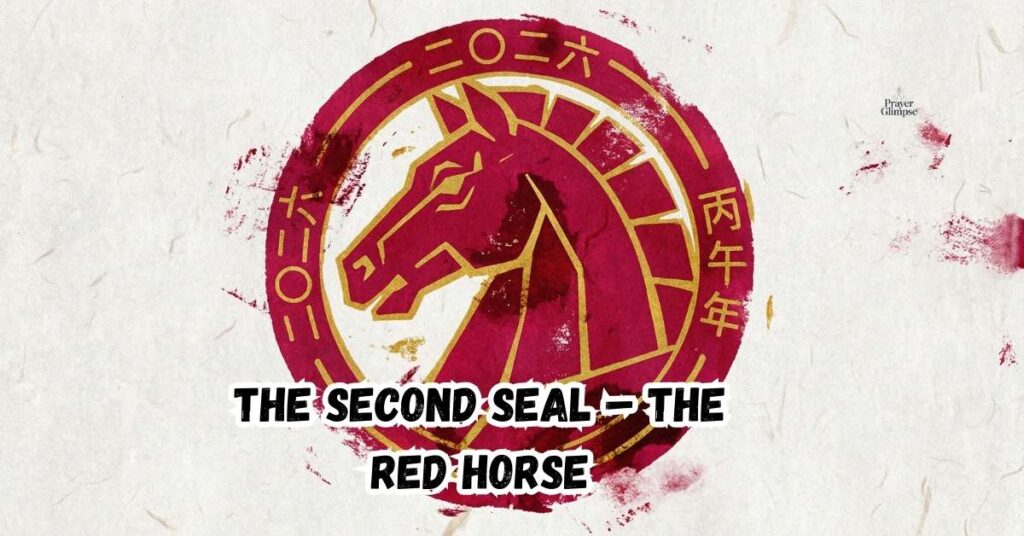
“When He broke the second seal, I heard the second living creature say, ‘Come!’ And another, a red horse, went out. And it was granted to the one who sat on it to take peace from the earth, and that people should kill one another; and there was given to him a great sword.” – Revelation 6:3–4
The red horse represents war and bloodshed. Its rider removes peace from the earth, and humanity experiences conflict, violence, and death.
Interpretations:
- Literal War: Some take this as a literal representation of wars throughout history.
- Spiritual Warfare: Others see it as the struggle between good and evil within human hearts.
- Judgment: It can also signify divine judgment against nations and systems of oppression.
Lessons for Today:
- Conflict is part of the fallen world, but God’s ultimate plan includes justice and restoration.
- Believers are called to pray for peace, pursue reconciliation, and remain faithful in times of strife.
Illustration: The wars and conflicts we witness today, whether political or social, remind us of the importance of peace and God-centered leadership.
3. The Third Seal – The Black Horse (Revelation 6:5–6)
Scripture:
“When He broke the third seal, I heard the third living creature say, ‘Come!’ So I looked, and behold, a black horse, and he who sat on it had a pair of scales in his hand. And I heard a voice in the midst of the four living creatures saying, ‘A quart of wheat for a denarius, and three quarts of barley for a denarius; and do not harm the oil and the wine.'” – Revelation 6:5–6
The black horse symbolizes famine, scarcity, and economic hardship. The scales indicate measurement and the careful rationing of resources.
Interpretations:
- Literal Famine: The horseman represents actual scarcity of food and resources.
- Social Inequality: It may symbolize the disparity between the rich and poor.
- Spiritual Hunger: Others interpret it as spiritual emptiness or longing for truth.
Lessons for Today:
- Even in scarcity, God remains in control.
- Believers are encouraged to trust God, act with generosity, and help those in need.
Illustration: During times of economic crisis, the black horse reminds us that material wealth is temporary, but spiritual richness endures.
4. The Fourth Seal – The Pale Horse (Revelation 6:7–8)
Scripture:
“When He broke the fourth seal, I heard the voice of the fourth living creature saying, ‘Come!’ So I looked, and behold, a pale horse. And the name of him who sat on it was Death, and Hades followed with him. And power was given to them over a fourth of the earth, to kill with sword, with hunger, with death, and by the beasts of the earth.” – Revelation 6:7–8
The pale horse represents death and widespread destruction. Its rider is literally named Death, accompanied by Hades.
Interpretations:
- Literal Death: The horseman brings physical death through war, famine, and disease.
- Spiritual Death: It can symbolize separation from God due to sin.
- Divine Judgment: A reminder that all humans are accountable to God.
Lessons for Today:
- Life is fragile, and death is a reality for all.
- Believers should live with awareness of eternity and hope in Christ’s victory over death.
Illustration: Natural disasters, pandemics, and wars throughout history reflect the reality of the pale horse. Yet, Christ offers hope and eternal life beyond death.
(The article would continue in this format for the remaining seals, including the fifth, sixth, and seventh seals, with detailed scripture, interpretations, lessons, historical context, modern-day reflections, and practical applications.)
FAQs
What are the Seven Seals in the Bible?
The Seven Seals are symbolic judgments and events in Revelation 6–8, revealed when Jesus, the Lamb of God, opens a scroll sealed with seven seals.
Who opens the Seven Seals?
Only Jesus Christ is worthy to open the seals, symbolizing His authority over heaven, earth, and history (Revelation 5:5).
What do the Four Horsemen represent?
The first four seals depict horsemen representing conquest (white), war (red), famine (black), and death (pale).
What happens in the fifth seal?
The fifth seal reveals the cries of martyrs who were killed for their faith, highlighting God’s justice and awareness of suffering.
What is the significance of the seventh seal?
The seventh seal brings silence in heaven, marking the calm before God’s final judgments and demonstrating His perfect timing and sovereignty.
Conclusion
7 Seals in the Bible of Revelation provide a powerful insight into God’s plan for the world. From the Four Horsemen representing conquest, war, famine, and death, to the cries of martyrs and cosmic upheavals, these seals illustrate both the challenges of human history and God’s ultimate sovereignty. They remind believers that while the world may face trials, God is always in control, and His justice will prevail.
Understanding the Seven Seals encourages spiritual readiness, steadfast faith, and trust in God’s perfect timing. They are not meant to instill fear but to inspire hope, patience, and vigilance, reminding us to live righteously, endure hardships faithfully, and look forward to the ultimate triumph of Christ over evil.
